Table of Contents
- The Hidden Crisis: How Hoarding Disorder Affects Thousands in Yellowstone County
- Standard Junk Removal vs. Extreme Hoarder Cleanouts: A Critical Comparison
- How Professional Cleanout Services Restore Extreme Properties: A Phased Operational Framework
- The Hidden Costs of Delay: Why Fast, Professional Cleanouts Save Money and Lives
- Your First Call: Compassionate, Confidential, and Efficient Service
- Key Takeaways
Hoarding disorder is not simply about clutter—it’s a severe psychological condition that transforms living spaces into hazardous environments requiring industrial-grade intervention. In Billings, MT, this condition affects approximately 2.5% to 6% of the population, translating to an estimated 2,925 to 7,020 individuals in our community who struggle with varying degrees of accumulation. The difference between standard clutter and extreme hoarding is profound. While everyday disorganization might involve piles of mail or overstuffed closets, extreme hoarding—classified as Levels 3-5 on the Institute for Challenging Disorganization’s Clutter-Hoarding Scale—presents genuine threats to life and property. These situations involve structural overload from debris weight, biohazards like Hantavirus from rodent infestations endemic to Montana, and critical fire hazards from blocked exits and rapid fuel spread potential. Professional hoarder cleanout services like Ballistic Junk Removal don’t just haul away junk—they execute complex property restoration operations utilizing industrial-grade equipment, OSHA-compliant safety protocols, and rapid execution strategies that standard junk removal companies simply cannot provide. This guide is essential reading for estate executors, landlords, real estate investors, and family members facing the overwhelming reality of extreme hoarding situations in Yellowstone County.
The Hidden Crisis: How Hoarding Disorder Affects Thousands in Yellowstone County
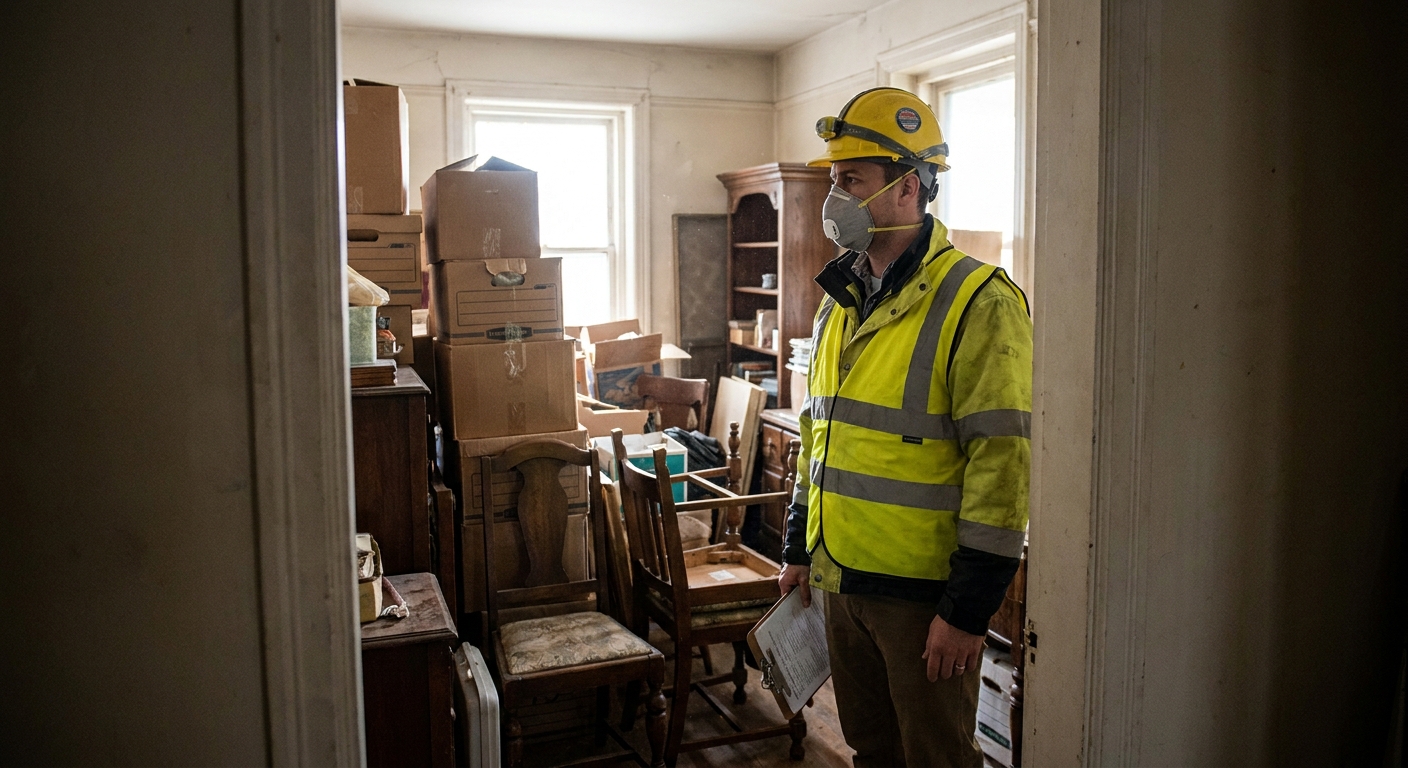
The American Psychiatric Association formally recognizes Hoarding Disorder as a distinct mental health condition characterized by persistent difficulty discarding possessions, regardless of their actual value. With Billings’ population of approximately 117,000 residents, the epidemiological reality is sobering: thousands of our neighbors are silently struggling behind closed doors. The Institute for Challenging Disorganization’s Clutter-Hoarding Scale provides critical context for understanding severity:
- Levels 1-2: Manageable with professional organizers
- Levels 3-5: Require immediate professional cleanout intervention due to safety hazards
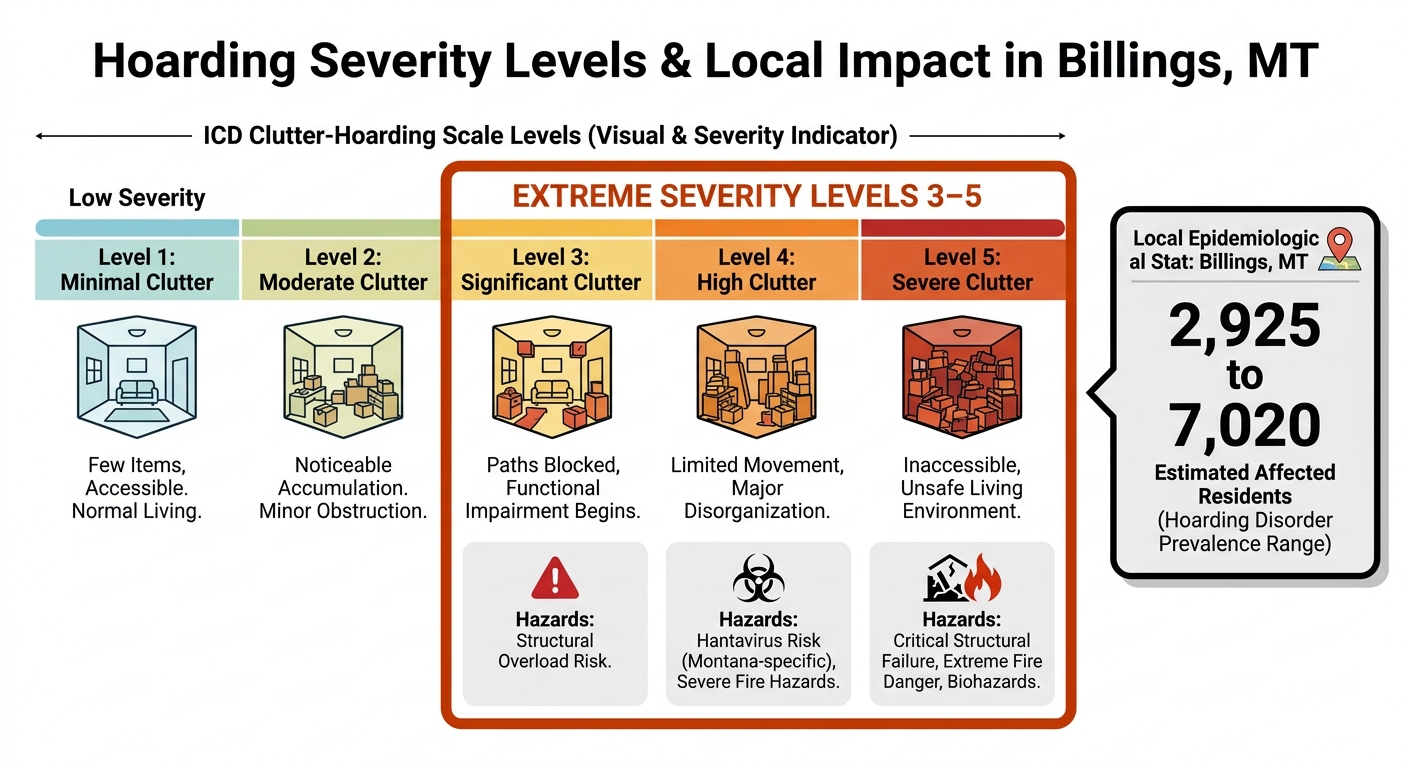
At Level 3 and beyond, the structural risks become undeniable. Floor joists begin bowing under excessive weight. Drywall sustains moisture damage from accumulated organic matter. In extreme cases, ceilings collapse under sustained pressure. These aren’t theoretical concerns—they’re documented structural failures that transform homes into condemned properties.
⚠️ Montana Health Alert: Rodent infestations flourish in accumulated debris, and their urine and feces pose severe risks. Hantavirus Pulmonary Syndrome, a potentially fatal respiratory disease transmitted through contact with rodent waste, is endemic to our region. The Centers for Disease Control identifies the Rocky Mountain states as high-risk zones, making professional biohazard handling not just advisable but essential.
Fire safety concerns add another layer of urgency. The National Fire Protection Association documents that hoarding fires cause disproportionate structural damage and firefighter injuries compared to standard residential fires. Blocked exits prevent escape. Dense accumulations provide rapid fuel for flames. First responders face entrapment risks in compromised structures. When these factors combine, what might be a containable incident becomes a catastrophic event. Many families don’t recognize the severity until external intervention forces action. Municipal code enforcement officers or fire marshals often discover these situations during routine inspections or emergency calls. At that point, property owners face mandatory cleanout orders with tight deadlines—typically 14 to 30 days to prevent condemnation. The clock starts ticking, and standard solutions won’t meet the timeline.
Standard Junk Removal vs. Extreme Hoarder Cleanouts: A Critical Comparison
The fundamental problem with attempting to address extreme hoarding with traditional junk removal services boils down to three words: volume, complexity, and speed. A standard residential junk removal job handles perhaps 1-5 cubic yards of debris—a truckload of furniture, a garage cleanout, a spring cleaning project. An extreme hoarder cleanout requires removing 50 to 200+ cubic yards of compacted, contaminated material, often weighing several tons.
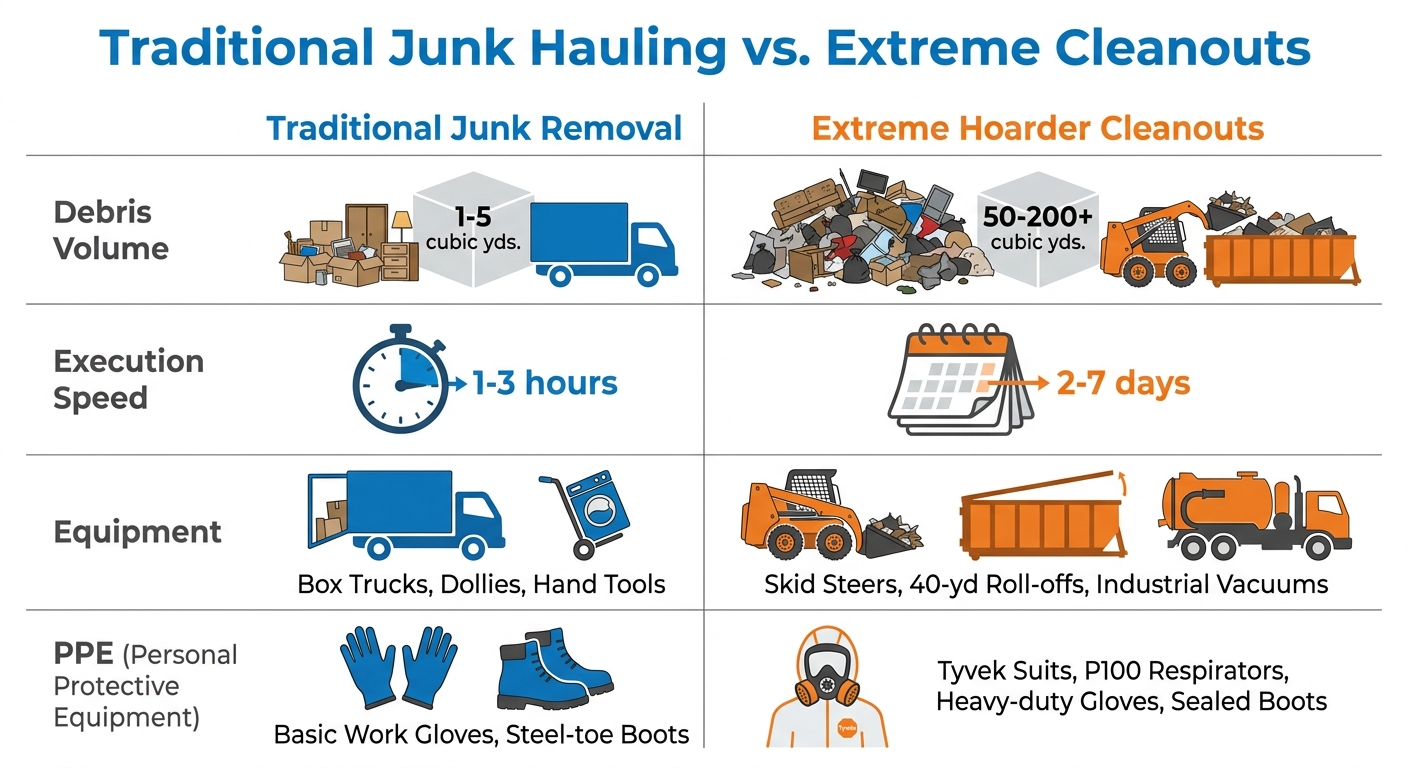
Execution speed separates capable providers from overwhelmed ones. Traditional jobs take 1-3 hours. Extreme cleanouts demand 2 to 7 consecutive days of coordinated, intensive labor. This isn’t about working harder—it’s about having the industrial capacity to sustain continuous debris extraction without bottlenecks. The equipment gap is equally stark:
| Standard Junk Removal Equipment | Extreme Cleanout Equipment |
|---|---|
| Box trucks (16-20 feet) | 20-40 yard roll-off dumpsters (multiple, swapped in continuous cycles) |
| Hand trucks and dollies | Hydraulic dump trailers for agile, rapid loading |
| Basic hand tools | Skid steers and front-end loaders for mechanized extraction |
| Pickup trucks for smaller jobs | Industrial PPE for biohazard environments |
Biohazard presence represents the most dangerous distinction. Traditional junk removal rarely encounters anything beyond household dust. Extreme cleanouts routinely involve rodent feces, black mold colonies, decayed organic matter, contaminated standing water, and ammonia concentrations dangerous to respiratory health. Without OSHA-compliant Personal Protective Equipment, workers face serious health risks—respiratory infections, zoonotic disease transmission, chemical exposure, and puncture injuries from hidden sharps. Montana’s Department of Environmental Quality enforces strict segregation requirements for waste disposal. Municipal solid waste flows to standard landfills. Hazardous household waste—paint, solvents, lithium batteries, pesticides, fluorescent bulbs—requires specialized processing facilities. Mixing these waste streams violates state environmental law and results in substantial fines. Professional cleanout services handle all documentation and disposal manifests to ensure full regulatory compliance, protecting property owners from legal liability.
Risks of DIY or Amateur Cleanouts:
- Health exposure to biohazards without proper PPE
- Legal liability from improper disposal triggering environmental fines
- Extended timelines from inadequate capacity prolonging property degradation
- Structural damage from untrained personnel
- Municipal violations from missing mandated deadlines leading to property condemnation
Attempting DIY cleanouts or hiring standard haulers for extreme situations creates cascading problems that often cost far more than professional intervention from the start.
How Professional Cleanout Services Restore Extreme Properties: A Phased Operational Framework
Ballistic Junk Removal employs a systematic, industrial-grade approach to safely and efficiently clear extreme hoarding environments. This isn’t guesswork—it’s a proven operational framework refined through experience with the most challenging properties in Yellowstone County.
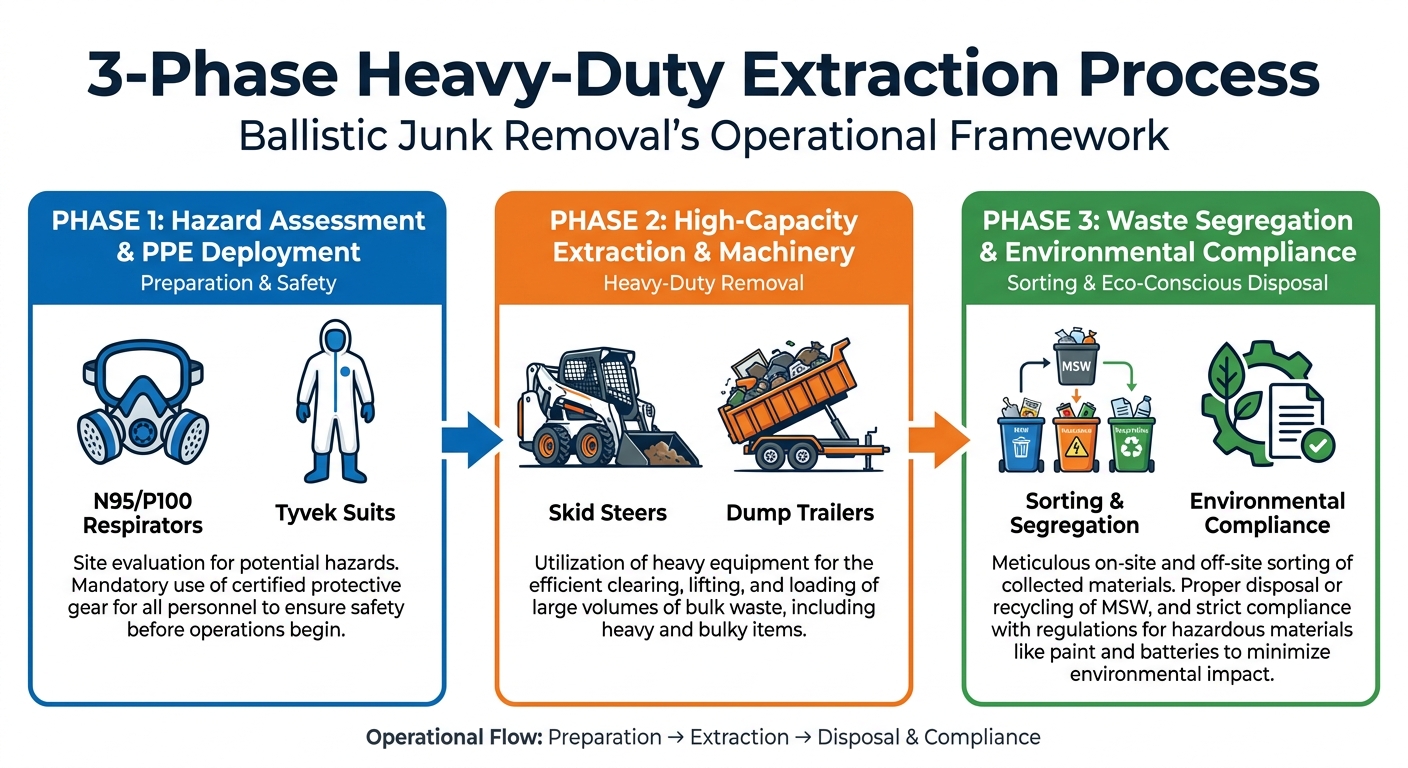
Phase 1: Hazard Assessment and PPE Deployment
Before a single item is removed, our team conducts a comprehensive site assessment. This isn’t a quick walkthrough—it’s a detailed hazard analysis identifying structural instability, biohazard concentrations, hazardous materials, and air quality concerns. In properties with suspected black mold or chemical contamination, air quality testing provides baseline data for worker safety protocols. Crews deploy OSHA-mandated Personal Protective Equipment specifically designed for biohazard environments:
- N95 or P100 HEPA-filtered respirators protect against mold spores, ammonia vapors, and airborne pathogens
- Puncture-resistant tactical gloves prevent needle sticks and sharp object injuries from hidden hazards
- Tyvek biohazard suits create a barrier against zoonotic disease transmission from rodent-contaminated environments
- Steel-toed boots with puncture-resistant soles protect against structural hazards and sharp debris
This equipment isn’t optional—it’s required by federal workplace safety regulations and critical for protecting workers from documented health hazards.
Phase 2: High-Capacity Extraction & Heavy Machinery
Speed matters in extreme cleanouts. Prolonged exposure time increases worker health risks. Extended project timelines allow further property degradation. Neighborhood disruption grows with project duration. Professional services minimize these factors through industrial-grade equipment capacity. Roll-off dumpsters (20-40 yards) serve as the backbone of debris extraction. Unlike pickup trucks requiring constant trips to disposal facilities, strategically positioned dumpsters are swapped in continuous cycles. When one fills, another arrives immediately, maintaining workflow efficiency and preventing crew downtime. Hydraulic dump trailers provide agile, rapid removal of heavy items—waterlogged furniture, compacted paper masses, saturated carpeting—without exhausting crew capacity through manual lifting. These trailers tilt to 45-degree angles, allowing gravity-assisted unloading that preserves worker energy for sustained operations. Skid steers and front-end loaders deploy in Level 5 situations where accumulation extends outdoors or structural integrity has failed completely. These machines safely scrape and clear debris by the ton in situations where manual extraction would take weeks. Particularly in partially collapsed structures or condemned buildings, mechanized removal protects workers from unnecessary structural hazard exposure.
💡 Key Insight: Rapid execution isn’t about cutting corners—it’s about deploying sufficient capacity to complete the job safely within compressed timelines. When municipal deadlines loom or property sales hinge on quick turnaround, only services with this equipment capacity can deliver.
Phase 3: Waste Segregation and Environmental Compliance
Montana’s Department of Environmental Quality maintains strict regulations governing solid waste disposal. Professional cleanout services shoulder the burden of regulatory compliance, protecting property owners from environmental liability. Our teams dynamically sort materials during extraction:
Municipal Solid Waste (MSW): Standard household debris flows to approved landfills with proper manifests documenting volume, origin, and disposal location.
Hazardous Household Waste: Paint, solvents, lithium batteries, pesticides, aerosol cans, fluorescent bulbs, and similar materials require specialized processing. These items are segregated, documented, and transported to appropriate hazardous waste facilities.
Failure to properly segregate waste streams results in significant environmental fines levied against property owners. Professional services carry the expertise, documentation systems, and disposal relationships to ensure full compliance with state regulations. Clients receive complete disposal manifests and compliance records documenting every aspect of the waste handling process. For estate settlements, insurance claims, or municipal inspections, this documentation provides critical proof of proper environmental stewardship.
The Hidden Costs of Delay: Why Fast, Professional Cleanouts Save Money and Lives
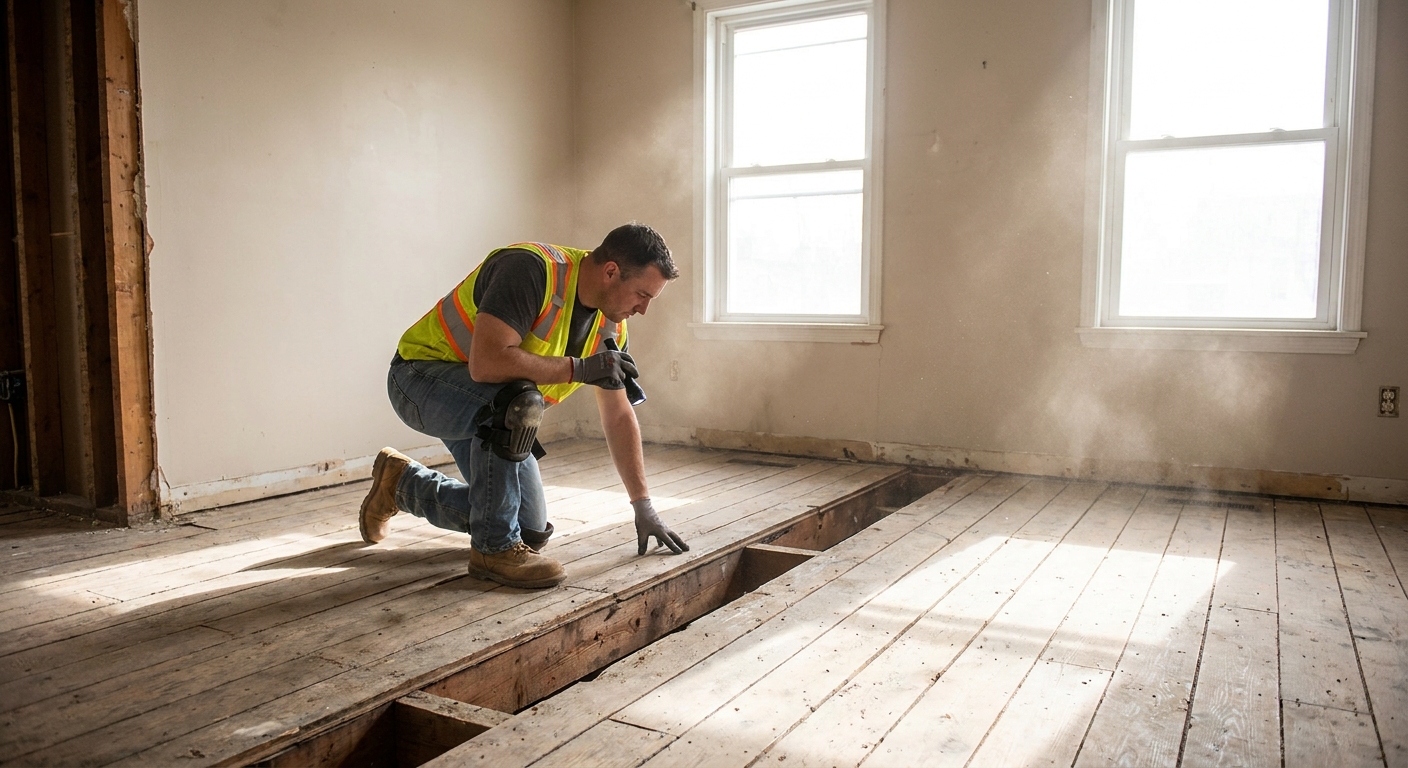
Delayed intervention in extreme hoarding situations isn’t just emotionally difficult—it’s financially devastating. Properties don’t remain static while families debate next steps. They actively degrade, accumulating damage that transforms manageable restoration into complete reconstruction.
Economic Impact
Real estate market analysis reveals that Level 4 hoarding homes typically suffer 30% to 50% devaluation compared to similar properties in clean condition. This isn’t superficial damage—it’s structural compromise, biohazard contamination, and system failure requiring extensive remediation. Consider the cascading costs of delay:
| Structural Damage Type | Estimated Cost |
|---|---|
| Subflooring saturation from rodent urine (complete replacement) | $3,000 – $8,000 |
| Black mold remediation after extended moisture exposure | $2,000 – $15,000 |
| Structural beam replacement from sustained weight overload | $5,000 – $25,000 |
| Electrical system replacement after rodent damage to wiring | $3,000 – $10,000 |
Professional intervention halts this degradation process. By rapidly extracting the “bio-load”—rotting organic matter, contaminated materials, pest-infested debris—cleanout services prevent the need for complete structural tear-downs. Real estate investors and estate executors who engage professional services early often save tens of thousands of dollars in avoided reconstruction costs.
💰 ROI Reality: A $5,000-$15,000 professional cleanout prevents $30,000-$80,000 in structural restoration. For distressed property investors, this math determines whether a purchase generates profit or becomes a money pit.
Fire Safety and Municipal Deadlines
When municipal code enforcement or fire marshals mandate property cleanouts, deadlines are non-negotiable. Typical enforcement orders allow 14 to 30 days for complete remediation. Failure to comply triggers property condemnation, forced city-contracted cleanout at premium rates, and potential liens against the property. The National Fire Protection Association’s research on hoarding fires reveals why these deadlines are so strict. Hoarding environments create perfect conditions for catastrophic fires:
- Blocked exits prevent occupant escape
- Dense fuel loads enable rapid fire spread
- Compromised structure increases collapse risk
- Difficult access delays firefighter intervention
These factors combine to create fires with disproportionately high fatality rates and structural damage. Fire marshals don’t impose cleanout orders to be punitive—they’re preventing loss of life. Only specialized cleanout companies with high-capacity hauling equipment can meet these compressed timelines. A standard junk removal service with a single box truck simply cannot extract 100+ cubic yards of debris in two weeks. The physical capacity doesn’t exist.
Health and Liability Risks
DIY cleanouts or amateur contractor attempts expose untrained individuals to severe health hazards without proper PPE. Hantavirus transmission doesn’t require direct contact with rodents—simply disturbing contaminated dust in enclosed spaces creates infection risk. Mold spore inhalation triggers respiratory infections and allergic reactions. Puncture injuries from hidden sharps carry infection risk. For landlords and estate executors, legal liability extends beyond personal health risks. If contractors or family members sustain injuries during amateur cleanout attempts, property owners face potential liability claims. Workers’ compensation insurance doesn’t cover volunteers. Standard homeowner’s insurance specifically excludes biohazard-related injuries. Professional cleanout services carry comprehensive liability insurance and workers’ compensation coverage. This transfers risk away from property owners, protecting personal assets from injury claims. When services employ OSHA-compliant safety protocols, the likelihood of injuries decreases dramatically.
Your First Call: Compassionate, Confidential, and Efficient Service
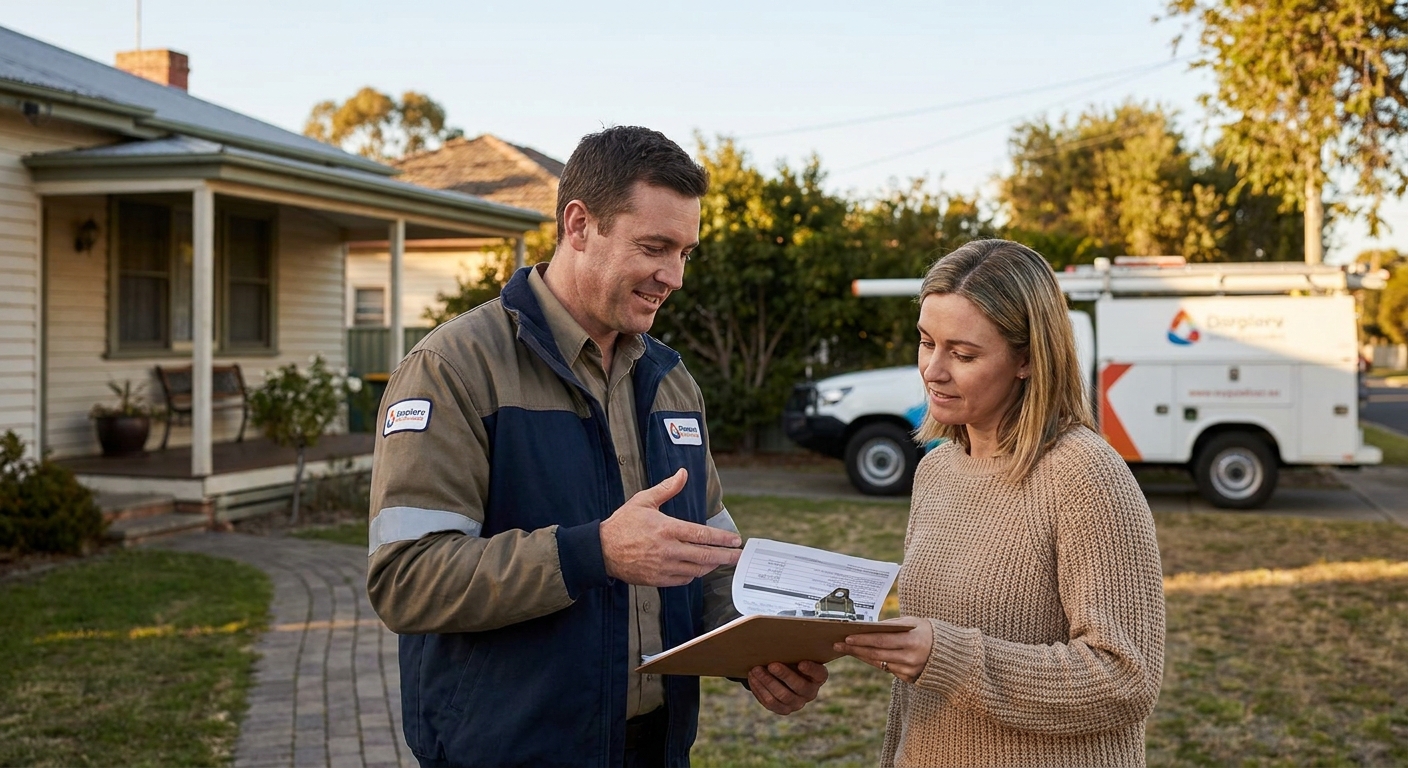
At Ballistic Junk Removal, we understand that reaching out for help with a hoarding situation takes courage. These circumstances are deeply personal, often emotionally complex, and sometimes tinged with shame or grief. Our approach balances industrial capability with genuine compassion.
Initial Consultation
We offer free, no-obligation assessments conducted via phone, video walkthrough, or on-site visit—whichever format provides the clearest picture while respecting your comfort level. During this consultation, we gather essential information:
- Property size and layout
- Estimated accumulation level
- Specific hazards (structural concerns, known biohazards, hazardous materials)
- Timeline requirements (municipal deadlines, estate settlement dates, sale closing dates)
- Access considerations (locked areas, tenant coordination, key access)
This information allows us to develop an accurate scope of work and resource allocation plan.
Confidentiality & Compassion
Hoarding situations often involve vulnerable individuals or families navigating difficult transitions—declining health, recent death of a loved one, mental health crises, or forced relocation. We approach every project with discretion and respect for the individuals involved. Our crews understand that items others might consider trash often hold emotional significance. We handle belongings with care, provide opportunities for item recovery when requested, and maintain absolute confidentiality about property conditions. Neighbors see a professional service truck, not a spectacle. We respect privacy.
Transparent Pricing
After the assessment, you receive a detailed, upfront quote covering:
- Labor costs (crew size × projected duration)
- Equipment rental (dumpsters, trailers, machinery)
- Disposal fees (landfill charges, hazardous waste processing)
- Regulatory compliance costs (manifests, documentation)
No hidden fees. No surprise charges. If conditions on-site differ significantly from initial assessment, we discuss scope changes before proceeding. You maintain control of project costs.
Flexible Scheduling
Cleanouts can be scheduled around your needs:
- Estate settlement timelines: Coordinating with probate deadlines and property sales
- Municipal deadlines: Meeting code enforcement orders and condemnation prevention
- Family availability: Allowing final walkthroughs or item recovery opportunities
- Tenant coordination: Minimizing disruption to adjacent units or neighbors
We understand that flexibility matters when coordinating multiple parties, legal requirements, and emotional considerations.
Full-Service Handling
From initial debris removal to final property walkthrough, Ballistic Junk Removal manages every operational aspect. You don’t coordinate dumpster swaps, manage disposal logistics, or handle regulatory paperwork. We execute the entire project, allowing you to focus on next steps—property repairs, sale preparation, or occupancy restoration.
Post-Cleanout Documentation
Upon completion, you receive comprehensive documentation:
- Disposal manifests proving proper waste handling
- Compliance records demonstrating environmental regulation adherence
- Before/after photos documenting transformation (optional, based on your preference)
- Certificate of completion suitable for municipal inspections or insurance claims
This documentation proves invaluable for estate settlement, property sales, insurance claims, and municipal code enforcement resolution.
Key Takeaways
Hoarding disorder affects thousands of Billings residents, and extreme cases demand specialized intervention far beyond standard junk removal capabilities. The restoration of severely compromised properties requires industrial-grade equipment, OSHA-compliant safety protocols, and regulatory expertise that amateur attempts simply cannot provide.
Professional cleanout services deliver three critical pillars:
🛡️ Safety: OSHA-compliant PPE and biohazard handling protocols protect workers and property owners from documented health hazards including Hantavirus, mold exposure, and zoonotic disease transmission.
⚡ Speed: High-capacity equipment—roll-off dumpsters, hydraulic trailers, and mechanized loaders—enables rapid execution that meets municipal deadlines and halts ongoing property degradation.
✅ Compliance: Full adherence to Montana DEQ waste regulations protects property owners from environmental fines while ensuring proper handling of hazardous materials.
The economic and safety return on investment is undeniable. Professional services prevent tens of thousands in structural damage, meet legal deadlines that preserve property ownership, and protect health through proper hazard mitigation. For families, landlords, and estate executors facing extreme hoarding situations, professional help transforms an overwhelming crisis into a manageable, resolved situation. You’re not alone in facing these challenges. Thousands of Yellowstone County residents struggle with hoarding disorder, and specialized services exist specifically to help. Taking action quickly—reaching out for professional assessment—is the first step toward resolution.
Ready to Take the First Step?
If you’re facing an extreme hoarding cleanout in Billings or Yellowstone County, we’re here to help with compassion, confidentiality, and proven expertise.
References:
- American Psychiatric Association. (2024). What is Hoarding Disorder? https://www.psychiatry.org/patients-families/hoarding-disorder/what-is-hoarding-disorder
- Centers for Disease Control and Prevention (CDC). (2024). Hantavirus Pulmonary Syndrome (HPS). https://www.cdc.gov/hantavirus/hps/index.html
- National Fire Protection Association (NFPA). (2023). Hoarding and Fire Safety. https://www.nfpa.org/Public-Education/Fire-causes-and-risks/Hoarding
- Occupational Safety and Health Administration (OSHA). (2024). Personal Protective Equipment. https://www.osha.gov/personal-protective-equipment
- Montana Department of Environmental Quality (DEQ). (2024). Solid Waste Management. https://deq.mt.gov/Land/solidwaste
- Mayo Clinic. (2023). Hoarding Disorder: Symptoms & Causes. https://www.mayoclinic.org/diseases-conditions/hoarding-disorder/symptoms-causes/syc-20356056