Table of Contents
- The Hidden Danger Under Montana Snow – Snow Mold and Lawn Health
- Wildfire Season – Creating Defensible Space Starts with Yard Waste Removal
- The Real Cost Analysis – Professional Removal vs. DIY Hauling
- Environmental Responsibility – Where Your Yard Waste Actually Goes
- Timing is Everything – Montana’s Seasonal Yard Waste Calendar
- Final Thoughts
Montana’s extreme seasonal changes—from intense growing seasons to harsh, prolonged winters—make yard waste management a critical aspect of property ownership, not just a matter of curb appeal. Unlike milder climates, the accumulation of leaves, pine needles, and brush in Montana creates specific biological and fire safety risks that can damage your lawn, threaten your home, and impact your property value. From snow mold that destroys turf under winter snow cover to wildfire embers that ignite dry brush piles during Montana’s red-flag warning days, unmanaged yard waste poses tangible threats. Failing to remove organic debris before winter can result in circular patches of dead grass requiring expensive reseeding or fungicidal treatments in spring. Meanwhile, the Montana Department of Natural Resources and Conservation emphasizes that most home ignitions during wildfires occur when embers land on combustible materials near structures—not from the fire front itself. This guide explains why seasonal yard waste removal is essential for Montana homeowners, covering lawn health, wildfire mitigation, and the surprising economics of professional removal versus DIY hauling. Whether you’re preparing for winter or creating defensible space for fire season, understanding these risks will help you protect your property year-round.
The Hidden Danger Under Montana Snow – Snow Mold and Lawn Health
Why Leaves and Pine Needles Left Over Winter Destroy Your Lawn
When organic debris isn’t cleared before Montana’s first snowfall, it creates an environment where destructive fungi thrive, leading to costly spring lawn damage that catches many homeowners off guard. The Science of Snow Mold Montana’s long-lasting snow cover—often persisting for months—creates anaerobic conditions when leaves, pine needles, and thatch mat down grass. Two primary culprits emerge: Grey Snow Mold (Typhula Blight) and Pink Snow Mold (Microdochium Patch). These are cold-loving fungi that actually thrive under snow cover, unlike most plant pathogens that require warmer temperatures. These fungi prevent air circulation and trap moisture against the grass surface, creating a suffocating blanket that results in circular patches of dead or matted grass that become visible only after spring snowmelt. By then, the damage is already done—the grass roots have been compromised or killed entirely during the winter months. Real Cost to Homeowners Prevention is far cheaper than cure. Montana State University Extension research shows that untreated snow mold often requires expensive reseeding or fungicidal treatments to restore lawn health. A single application of fungicide can cost $100-$300 for an average residential lawn, and severe cases may require complete turf replacement in affected areas—a project that can easily exceed $1,000 when you factor in soil preparation, seed or sod, and irrigation needs. In contrast, simple fall cleanup eliminates the problem entirely at a fraction of the cost. Removing leaves and organic debris before the first significant snowfall prevents the anaerobic conditions that allow snow mold fungi to colonize and spread.
The Pine Needle Problem While the myth that pine needles acidify soil has been debunked by Oregon State University Extension, their real issue in Montana landscapes is creating dense mats that block sunlight and water from reaching soil. In landscapes dominated by Ponderosa Pine and Douglas Fir—two of Montana’s most common residential trees—these needle mats accumulate rapidly. A thick layer of pine needles doesn’t just impact grass health; it chokes out desirable vegetation, creates habitat for rodents seeking winter shelter, and significantly increases fire fuel loads during dry seasons. The combination of these factors makes regular pine needle removal essential for Montana property maintenance. Proactive Prevention The solution is straightforward: remove all leaves, needles, and organic debris before the first significant snowfall, which typically arrives between late October and early November in most Montana regions. This timing varies by elevation and location—Kalispell sees earlier snow than Billings, and mountain properties need earlier attention than valley locations. Professional removal services like Ballistic Junk Removal ensure thorough clearing, including hard-to-reach areas under shrubs and along fence lines where homeowners often miss accumulation. These overlooked spots can harbor concentrated pockets of organic matter that become ideal environments for fungal growth, undermining even diligent DIY efforts.
Wildfire Season – Creating Defensible Space Starts with Yard Waste Removal
How Yard Debris Becomes Fuel: Protecting Your Home in Montana’s Wildland-Urban Interface
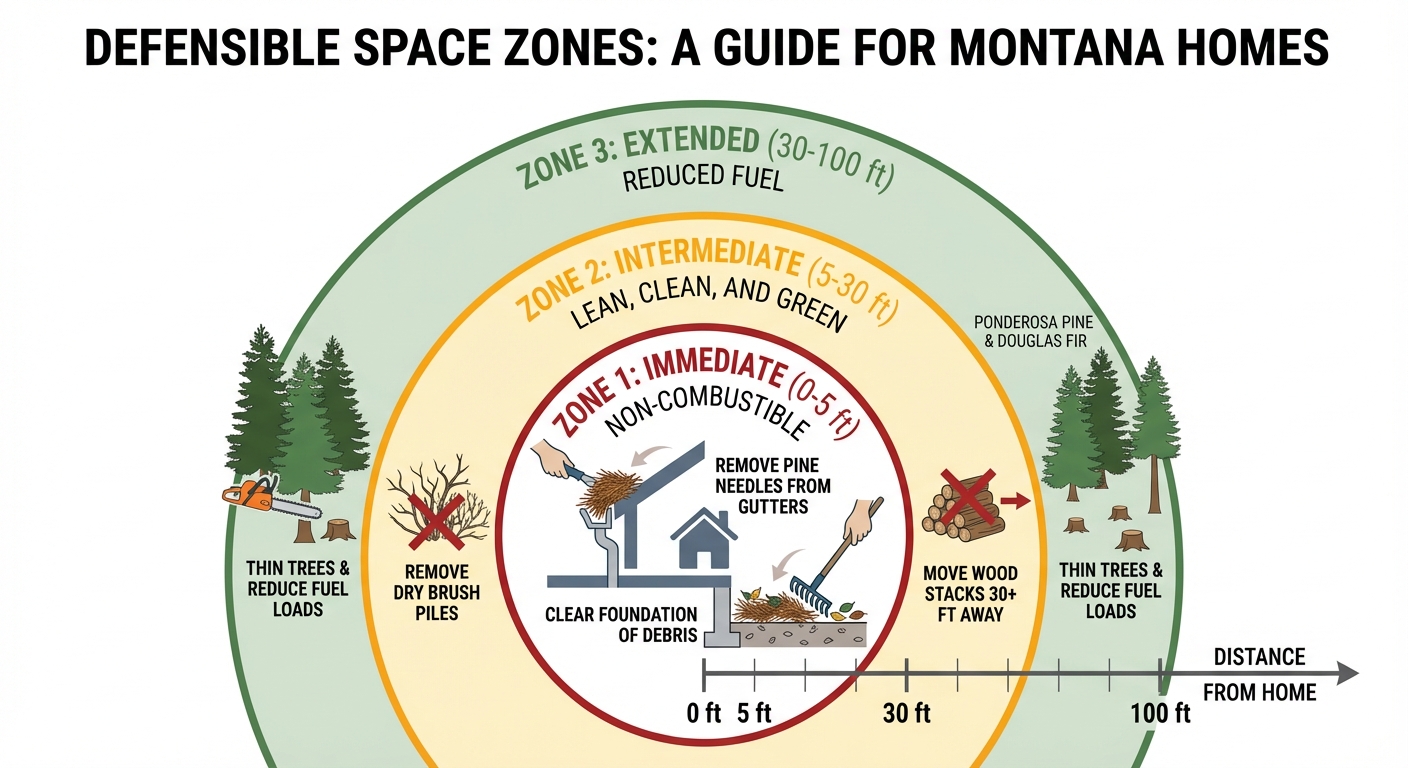
Montana’s transition from spring to summer brings significant wildfire risk that affects thousands of properties across the state. Removing yard waste isn’t just good housekeeping—it’s the foundation of creating “defensible space,” the proven strategy that protects homes when wildfires threaten. Understanding Montana’s Wildfire Reality The Montana Department of Natural Resources and Conservation reports that most home ignitions during wildfires are caused by embers landing on combustible materials near structures, not the advancing fire front. This is a critical distinction that changes how homeowners should think about fire protection. Montana’s dry summer air means deadfall and brush piles cure quickly, transforming from green, living material into highly flammable tinder in a matter of weeks. A brush pile you intended to “deal with later” can become a concentrated fuel source capable of generating enough heat to ignite your home’s exterior—even if the main fire is hundreds of feet away. The Home Ignition Zone Concept Understanding defensible space zones is critical for protecting your Montana home. FireSafe Montana and national fire authorities divide this critical area into three zones:
| Zone | Distance | Priority Actions |
|---|---|---|
| Immediate Zone | 0-5 feet | Non-combustible materials only; remove all organic debris, dead leaves, and pine needles |
| Intermediate Zone | 5-30 feet | Space vegetation; remove all dead plant material and brush piles |
| Extended Zone | 30-100 feet | Remove dead vegetation; thin trees to interrupt fire paths |
Immediate Zone (0-5 feet from structure): This area must be strictly non-combustible. Dead leaves in gutters, pine needles against foundations, and any organic debris are primary ignition points. Even a small accumulation can provide enough fuel for embers to establish sustained combustion. This zone should consist of hardscaping, gravel, or well-watered, maintained plants with high moisture content. Intermediate Zone (5-30 feet): Vegetation should be spaced, and all dead plant material must be removed—including those “temporary” brush piles homeowners intend to deal with “later.” In this zone, strategic landscaping can actually slow fire progression. Native plants with high moisture content, properly spaced, can create a barrier that reduces radiant heat while maintaining aesthetic appeal. However, any dead vegetation completely undermines these benefits. Extended Zone (30-100 feet): Focus on removing dead vegetation and thinning trees to interrupt potential fire paths. This doesn’t mean creating a barren moonscape; it means managing fuel loads and ensuring fires can’t easily “ladder” from ground vegetation up into tree canopies where they become nearly impossible to control. Common Yard Waste Fire Hazards
- Dry brush piles: Often left near sheds or property edges, these act as concentrated fuel sources that can ignite from a single ember. Once burning, they generate intense heat capable of igniting structures 30-40 feet away through radiant heat alone.
- Deadfall from windstorms: Strong winds regularly knock down branches that dry rapidly in Montana’s low-humidity environment, becoming tinder within days.
- Accumulated pine needles: Needles collect in roof valleys, gutters, and deck corners where embers can easily penetrate and establish sustained burning.
The Proven Protection Factor Studies cited by the National Fire Protection Association demonstrate that homes with properly maintained defensible space are significantly more likely to survive wildfires without direct fire suppression intervention. This statistic matters enormously during major fire events when firefighting resources are stretched thin across multiple active fires. The NFPA identifies debris cleanup as the single most effective, low-cost action a homeowner can take for wildfire preparedness. It costs a fraction of what you’d spend on fire-resistant roofing or specialized siding, yet provides comparable or superior protection by eliminating the fuel sources that cause most home ignitions.
The Real Cost Analysis – Professional Removal vs. DIY Hauling
Why Professional Yard Waste Removal Often Costs Less Than “Doing It Yourself”
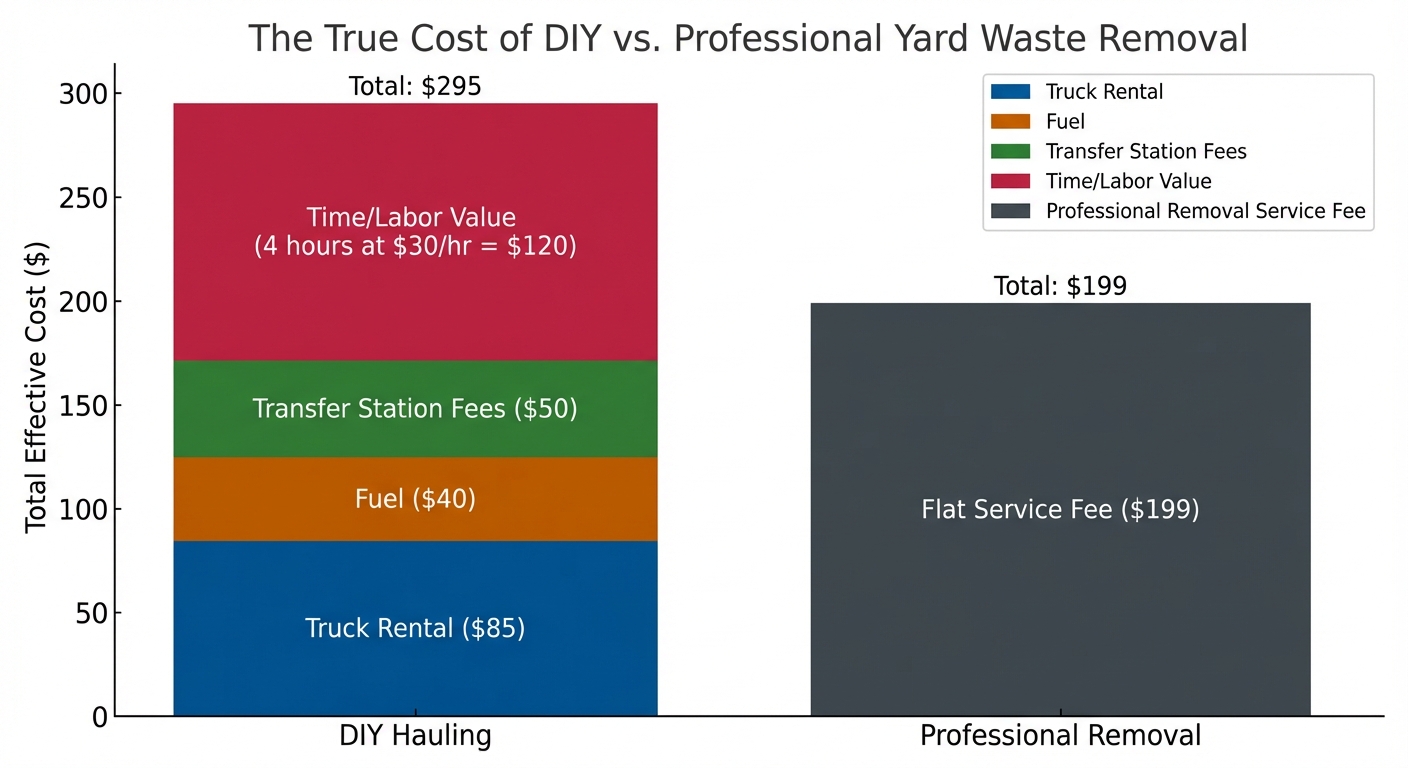
Homeowners frequently underestimate the true cost of self-hauling yard waste to transfer stations. When time, labor, vehicle expenses, and injury risk are factored in, professional removal often delivers superior economic value while saving your weekends. The Hidden Costs of DIY Most homeowners lack appropriate hauling capacity for significant yard waste removal. Consider these often-overlooked expenses:
- Equipment rental: Truck or trailer rental typically runs $50-$100+ per day, not including fuel for multiple transfer station trips.
- Time investment: A typical yard cleanup consumes 2-4 hours minimum for a single load. Properties with substantial debris often require 5-10+ pickup loads, translating to multiple weekend days.
- Physical risk: Back injuries from improper lifting, vehicle damage from branches, and overloaded vehicle hazards are common outcomes.
- Transfer station fees: Montana transfer stations charge per load or by weight, with costs ranging $25-$75+ per load.
The Professional Advantage Services like Ballistic Junk Removal operate on a “point and gone” model—homeowners simply indicate what needs removal, and the team handles all loading, hauling, and disposal. There’s no need to rent equipment, make multiple trips, or spend your weekend wrestling with brush piles.
| Benefit | DIY Approach | Professional Service |
|---|---|---|
| Time Required | Entire weekend (8-16 hours) | 15 minutes to few hours |
| Physical Labor | Exhausting, injury risk | Zero homeowner effort |
| Equipment Needed | Rental truck, tools, safety gear | All equipment provided |
| Total Cost | $130-$225+ per cleanup | Competitive flat rates |
| Insurance Coverage | Your personal liability | Fully insured professionals |
Professional trucks have heavy-duty capacity that can remove in one trip what would take a homeowner 5-10+ pickup loads. This efficiency isn’t just convenient; it’s economical. The consolidated hauling reduces per-ton costs and ensures proper disposal in a single visit. Comparative Economic Reality When you calculate the true cost of DIY hauling—truck rental ($75-$100+), fuel for multiple trips ($30-$50), transfer station fees ($25-$75 per load), and your time investment (2-4 hours+ of physical labor)—the total effective cost reaches $130-$225+ per cleanup, plus the value of lost personal time and the physical toll on your body. Professional services offer competitive flat rates that include all equipment, labor, hauling, and disposal fees. More importantly, they deliver value that extends beyond simple cost comparison: professional efficiency, zero homeowner effort, comprehensive insurance coverage, and the peace of mind that comes from knowing the job is done thoroughly and correctly.
Environmental Responsibility – Where Your Yard Waste Actually Goes
The Green Side of Yard Waste Removal: Composting, Diversion, and Responsible Disposal
Professional junk removal services often provide environmental benefits beyond simple hauling—including organic waste diversion from landfills and access to industrial composting infrastructure unavailable to individual homeowners. The Landfill Problem Yard trimmings account for approximately 12.1% of municipal solid waste generation nationally, according to EPA data. This percentage represents millions of tons of organic material that could be diverted to more environmentally beneficial uses. When organic matter decomposes in landfills without oxygen (anaerobic decomposition), it produces methane—a greenhouse gas 25 times more potent than CO2 over a 100-year timeframe. This means that seemingly “natural” yard waste actually contributes significantly to climate change when disposed of improperly.
Professional Waste Segregation Established junk removal companies often have partnerships with green waste facilities and industrial composting operations where available in Montana. This infrastructure allows them to divert organic debris—leaves, branches, grass clippings—from landfills and route it to facilities that process it into compost or mulch products. While Montana’s infrastructure for organic waste diversion is less developed than coastal states, professional haulers have the logistical capacity and industry connections to route materials appropriately when facilities exist. They stay informed about regional composting options and disposal regulations that individual homeowners may not be aware of. These commercial-scale composting facilities can handle volumes and material types that residential composting cannot. Large branches, woody material, and mixed organic debris that would take years to break down in a backyard compost bin can be processed efficiently through industrial grinding and controlled composting processes. Volume and Efficiency Professional services consolidate waste from multiple properties, achieving transportation efficiency that individual homeowners cannot match. Instead of dozens of individual trips by separate homeowners, a single commercial truck can collect and transport material from multiple sites in one efficient route. This consolidation reduces the per-ton carbon footprint of waste disposal through optimized routing and full-capacity hauling. A fully loaded commercial truck is far more fuel-efficient per ton of material moved than multiple partially-loaded pickup trucks making separate trips. Homeowner Takeaway When selecting a junk removal service, homeowners can ask specific questions about environmental practices: “What percentage of organic waste is diverted from landfills?” and “Do you partner with composting facilities?” Companies committed to environmental responsibility will have clear answers and documented disposal practices rather than vague assurances. Ballistic Junk Removal prioritizes responsible disposal practices and maintains relationships with Montana facilities that can process organic material appropriately. This commitment ensures that your yard waste serves beneficial purposes rather than contributing to landfill methane generation.
Timing is Everything – Montana’s Seasonal Yard Waste Calendar
When to Schedule Yard Waste Removal for Maximum Property Protection
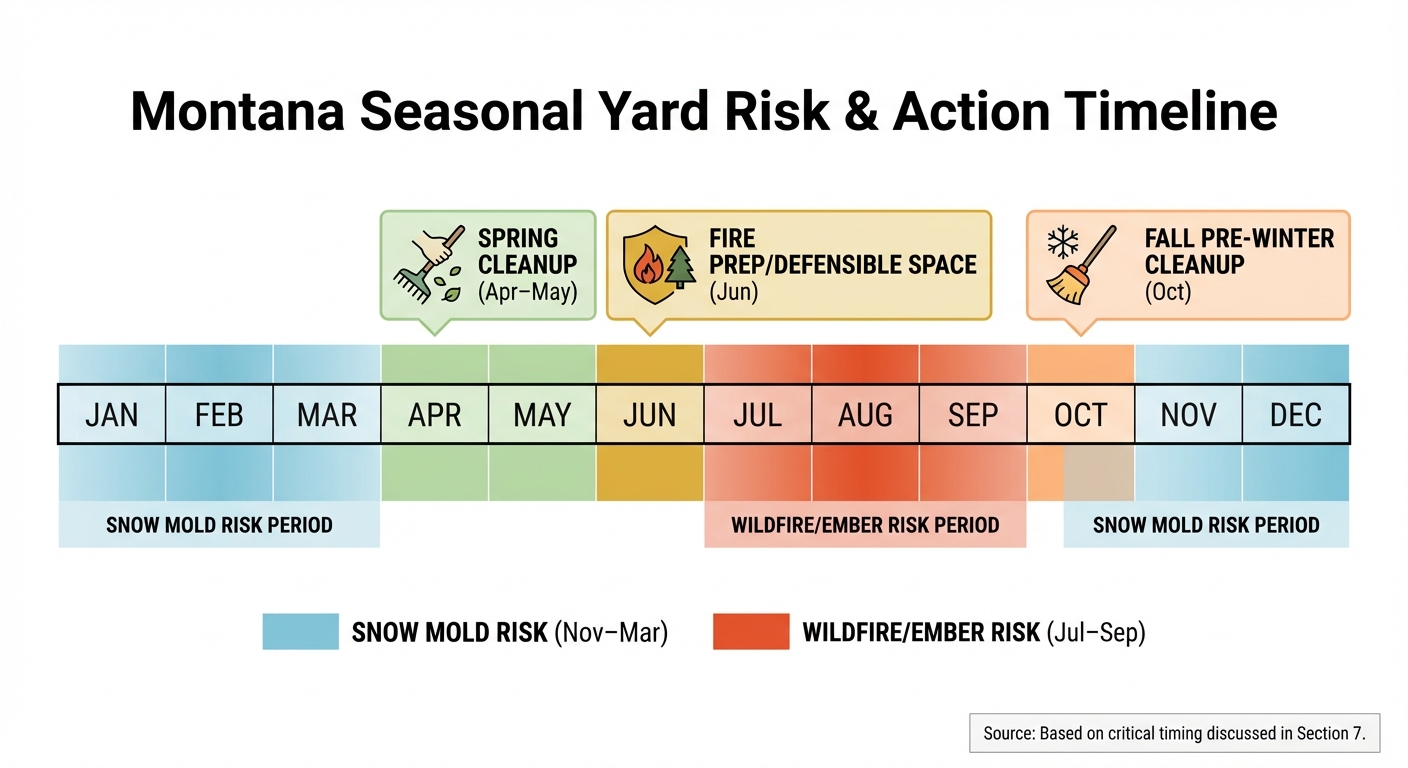
Understanding Montana’s seasonal cycles helps homeowners time yard waste removal for optimal lawn health, fire safety, and property value—while avoiding the rush periods when services are in highest demand. Spring (April-May): Post-Winter Cleanup Spring focuses on removing winter deadfall, broken branches from snow load, and early leaf or needle accumulation that survived winter. This timing allows grass to dry and breathe, reducing lingering snow mold effects and preparing your lawn for the growing season ahead.
Clearing debris in spring also reveals winter damage that needs attention—broken sprinkler heads, cracked pavement from frost heaving, or fence damage from snow weight. Early identification means repairs can be completed before problems worsen. Late Fall (October-November): Pre-Winter Preparation This is the most critical removal period for Montana homeowners. All leaves, pine needles, thatch, and dead plant material must be cleared before sustained snowfall arrives. This single cleanup prevents snow mold development and ensures your property enters winter in clean, protected condition. The timing matters enormously. Clear too early, and additional leaf fall from late-season winds will require a second cleanup. Wait too long, and the first significant snow will trap organic debris against your lawn for the entire winter. Most Montana regions see their first lasting snow between late October and mid-November, making early-to-mid October the ideal window for final fall cleanup. Early Summer (June-July): Fire Season Preparation Early summer focuses on removing dry brush piles, deadfall, and accumulated debris in the Home Ignition Zone (0-30 feet from structures). This timing provides maximum protection during Montana’s peak wildfire season, which typically runs July through September. Creating defensible space in early summer—before fire warnings are issued—ensures your property is protected when danger arrives. Once red-flag warnings are in effect, junk removal services may be backlogged with emergency requests from homeowners who waited too long, potentially leaving your property vulnerable during the highest-risk period. Mid-Summer (July-August): Maintenance Touch-Ups Mid-summer focuses on addressing new deadfall from windstorms, removing dried vegetation from flowerbeds, and maintaining clear gutters and roof lines. These maintenance touch-ups prevent small accumulations from becoming fire hazards during the driest months. Ongoing vigilance during peak fire season is essential. Montana’s summer weather can change rapidly, with wind events knocking down new branches or drying previously green vegetation into tinder in a matter of days.
| Season | Primary Focus | Key Benefits |
|---|---|---|
| Spring (Apr-May) | Winter damage removal | Prevents lingering snow mold; lower service demand |
| Late Fall (Oct-Nov) | Pre-winter cleanup | CRITICAL: Prevents snow mold; protects lawn health |
| Early Summer (Jun-Jul) | Fire season prep | Creates defensible space before peak fire season |
| Mid-Summer (Jul-Aug) | Maintenance touch-ups | Addresses new deadfall; maintains fire protection |
Strategic Scheduling Homeowners who establish recurring seasonal service—spring and fall cleanups at minimum, with mid-summer touch-ups as needed—ensure their property remains protected year-round. This approach avoids last-minute scrambles during peak demand periods, ensures consistent property maintenance, and often results in better pricing through ongoing customer relationships. Ballistic Junk Removal offers seasonal scheduling options that guarantee your property receives attention during critical windows. By planning ahead and scheduling recurring service, you eliminate the stress of remembering to schedule cleanup during busy seasons while ensuring your property receives professional attention exactly when it matters most.
Final Thoughts
For Montana homeowners, seasonal yard waste management is far more than an aesthetic concern—it’s a critical strategy for protecting lawn health, preventing wildfire damage, and preserving property value. From the biological threat of snow mold fungi thriving under matted leaves during winter months to the very real danger of wildfire embers igniting brush piles during Montana’s dry summer season, unmanaged organic debris poses tangible risks that extend well beyond curb appeal. The economic case for professional removal is equally compelling. When factoring in vehicle costs, transfer station fees, physical labor, and time investment, DIY hauling often costs more—in both dollars and personal energy—than hiring experienced professionals who complete in hours what would take homeowners entire weekends. Most importantly, timing matters. By scheduling yard waste removal strategically—particularly the critical late-fall cleanup before snow arrives and early-summer fire preparation—homeowners ensure their properties remain safe, compliant with fire mitigation best practices, and positioned to maintain healthy landscapes year-round. Whether you’re defending against winter lawn disease or creating the defensible space that could save your home during fire season, proactive yard waste management is one of the highest-return investments Montana property owners can make. The question isn’t whether to remove yard waste—it’s whether to spend your weekend doing it or let professionals handle it while you enjoy Montana’s incredible outdoor recreation opportunities.
Ready to Protect Your Montana Property?
Contact Ballistic Junk Removal today to schedule your seasonal yard waste removal and experience the peace of mind that comes from professional, thorough property maintenance.
References:
- Montana State University Extension. (2024). Turfgrass Diseases: Snow Molds. https://plantpath.montana.edu/extension/plant-disease-fact-sheets.html
- Oregon State University Extension. (2024). Do pine needles make soil more acidic? https://extension.oregonstate.edu/news/myth-vs-reality-whats-truth-behind-some-common-gardening-practices
- Montana Department of Natural Resources and Conservation (DNRC). (2024). Prepare for Wildfire: Defensible Space. https://dnrc.mt.gov/Forestry/Wildfire/prepare-for-wildfire
- FireSafe Montana. (2023). Home Ignition Zone and Defensible Space. https://firesafemt.org/home-ignition-zone/
- United States Environmental Protection Agency (EPA). (2023). Facts and Figures about Materials, Waste and Recycling: Yard Trimmings. https://www.epa.gov/facts-and-figures-about-materials-waste-and-recycling/yard-trimmings-material-specific-data
- National Fire Protection Association (NFPA). (2024). Preparing homes for wildfire. https://www.nfpa.org/Public-Education/Fire-causes-and-risks/Wildfire/Preparing-homes-for-wildfire
- National Association of Realtors. (2023). Remodeling Impact Report: Outdoor Features (Curb Appeal). https://www.nar.realtor/research-and-statistics/research-reports/remodeling-impact-report-outdoor-features